Emerald Fennell continues her divisive streak with the immaculately hollow 'Wuthering Heights'
To see writer-director’s Emerald Fennell Wuthering Heights, or pardon me, “Wuthering Heights” (ffs), her latest offering to divide the Internet, is to understand why she keeps referencing her teenage years. This is certainly as the book would be interpreted by an upper class teenage girl staring dreamily at the gardener working at her parents’ lavish home, internalized misogyny and all.
There’s even a toxic bff (Hong Chau, who deserves better) who is so jealous of her friend once she gets a boyfriend, and you know that one character (Alison Oliver, stealing scenes despite it all) who ends up being one of the most heartbreaking bits of collateral damage? Who loses nearly the entirety of her sense of safety, security, money, and sanity? Turns out the whole time she was the one in control!

Right…
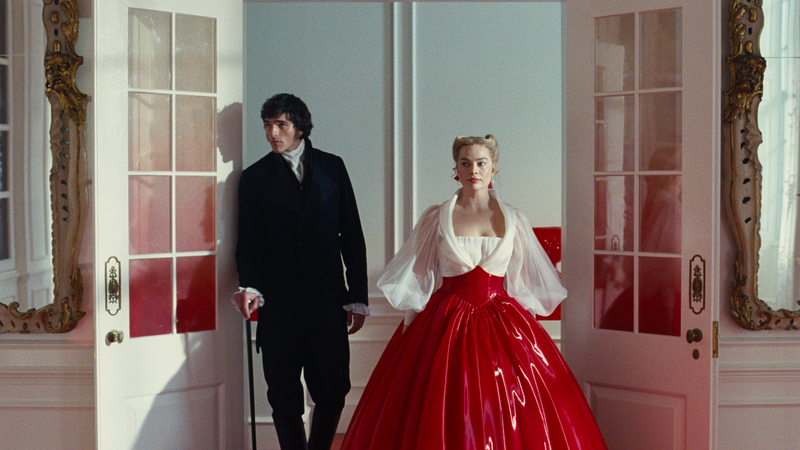
Anyway, that is in itself forgivable. When we read the 1847 book Wuthering Heights as teenagers, it’s so easy to see it this way, with the fiery, wild Catherine Earnshaw and the orphan her aristocratic family takes in, the mysteriously brooding Heathcliff (played in adolescence and young adulthood by Margot Robbie and Jacob Elordi) as star-crossed lovers, torn apart by a society that just doesn’t get it. But to bring this mindset to our so-called maturity means a whole lot of toxicity in a fashion that author Emily Brontë never intended.
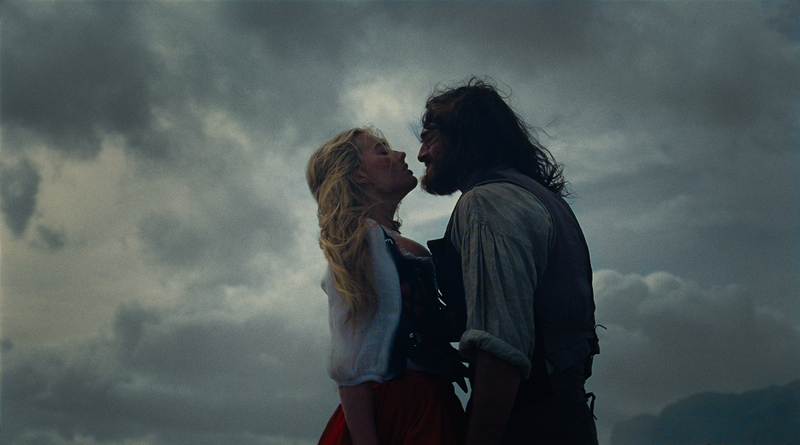
Catherine and Heathcliff do indeed earn every bit of their reputation as the most toxic soulmates ever to set a bodice to heaving, and their love story is set appropriately, with as many a twist and a turn as the wild English moors that form their world and their being as near feral children and about as feral adults. Too bad Fennell offers merely an immaculately curated garden with a pool so shallow its characters never have a chance at anything resembling depth. And it’s her female characters who suffer most for it in body and spirit, punished in ways that are beyond even what Brontë thought up.
Warner Bros. Pictures
Heathcliff’s considerable rough edges are also considerably sanded down to give us a character washed whiter than sour cream, with the many references to his racial ambiguity scrubbed in favor of the expected rippling abs. And this Catherine, with her class obsession and desires for favors bestowed in visits from wealthy neighbors, more resembles Austen’s Emma Woodhouse. This lady doesn’t rage, she doth protest too much. Her idealized working class fantasy will not only selflessly take a beating for his Cathy, he’ll break his chair into pieces at the chance of more warmth for her and even cover her eyes at the sight of those savage lower classes and their masochistic, kinky rolls in the hay. Sensitively of course.
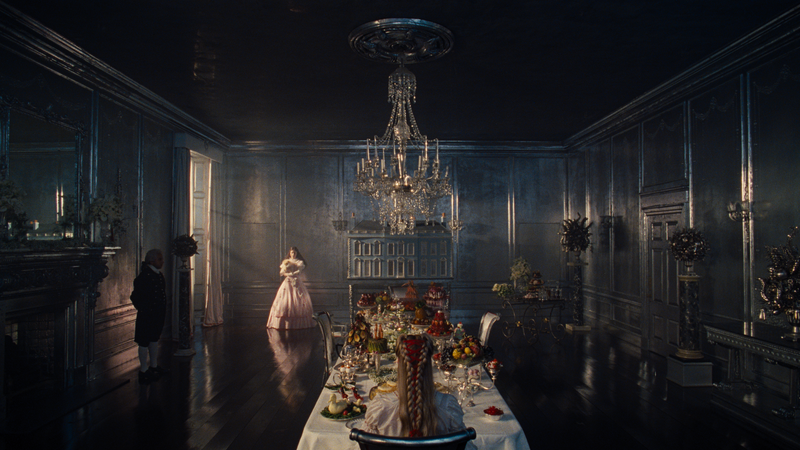
Yes, Fennell is determined to make class a part of the conversation, and one of the more laughable ironies is her reducing the role of the house servant narrator Nelly (Chau), who is also the novel’s true heart and moral center, to that of a malicious participant in this sick society’s destructive machine. It’s an exploration of violence for those who can’t stand the sight of blood, except as decoration. How posh, and how indicative of the director’s background that she will tolerate no less than being the only one who is allowed to gaze. But anyone outside of her experience would hardly be flattering for a movie that values appearance above all else.
Warner Bros. Pictures
Because for a certain audience, this will be beside the point. If you are unaware of the story or only its surface, the brief points where Fennell almost makes Wuthering Heights completely her own (the opening alone promises an epic subversion it will not follow through on) will not only be enough, it will encompass all. The stylized, red-soaked setting, with the fiercely ahistorical fashions that Robbie wears so perfectly, set to a vibrant soundtrack? All of it will do what it’s designed to do: coalesce perfectly into a swoonworthy setting worthy of the most impeccable TikTok feed, because Fennell is nothing if not a distinctly visual storyteller.
Anyone trying to rend apart such a delicate process would only look savage in the eyes of those who wish to be the beholders. But by flattening, removing, or reducing characters to mere function, the damage was done long before.
Rating: D